Our Take: Budget 2027 Gave Startups RM450 Million. It Gave Johor RM132 Billion.
e27 summed up Malaysia's Budget 2027 as a modest cheque for startups — about US$110 million, or RM450 million — while the bigger cheques went elsewhere. That is a fair read. But for a property investor the interesting question is not what founders missed. It is where the bigger money actually went, because the single largest number in the budget speech was not a federal allocation at all. It was the RM132 billion of investment already recorded inside the Johor-Singapore Special Economic Zone.
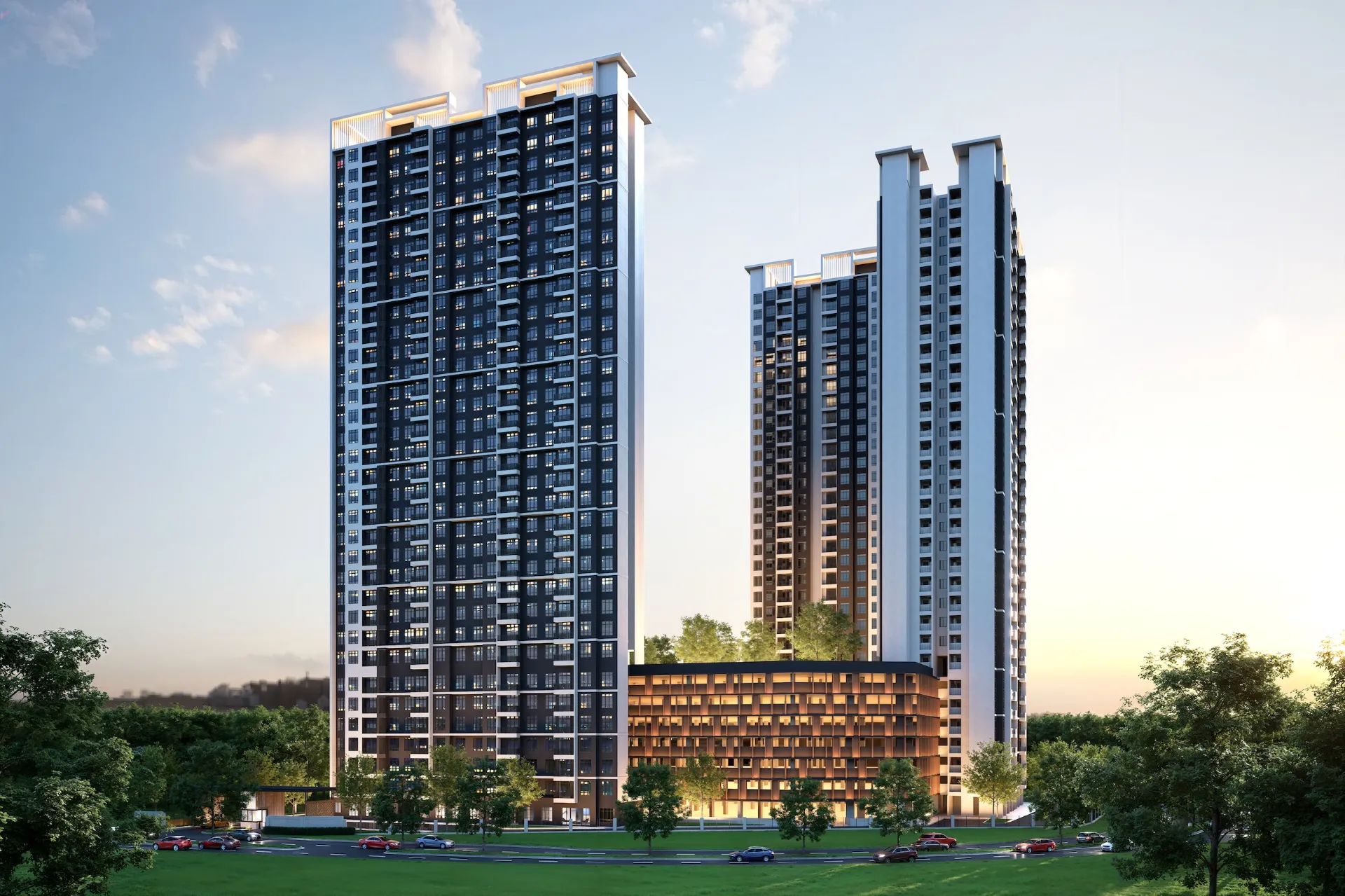
Where the bigger cheques went
Budget 2027 is a RM459.8 billion budget: RM376.8 billion in operating expenditure and RM83 billion in development expenditure. The RM450 million for startups is the smallest line on the list below by a wide margin. Everything else is a multiple of it.
| Line item | Amount | Who it reaches |
|---|---|---|
| JS-SEZ investment recorded, Jan 2025 – Jun 2026 | RM132 billion | Johor industrial, data-centre, logistics and services projects |
| Financing and loan guarantees for 2027 | RM57 billion (from RM50 billion) | SMEs and strategic sectors via SJPP and CGC |
| Domestic investment mobilised through GLICs | RM25 billion | Local firms in semiconductors, aerospace, digital |
| Housing Credit Guarantee Scheme | Up to RM20 billion | 80,000 first-time homebuyers |
| Nexus Sedenak, northern JS-SEZ | RM12 billion potential · 45,000 jobs | Industrial hub near Kulai; interchange to be upgraded |
| TVET and skills | RM8 billion | Workforce for semiconductors, data centres, logistics |
| Micro-financing | RM6.6 billion | Small and Bumiputera businesses |
| Startups via Jelawang Capital and Dana Perintis | RM450 million | Early-stage companies |
Two items sit outside the table because they are tax rules rather than money. New Global Services Hub companies get a 5% tax rate on qualifying income from 1 January 2027, extendable in five-year blocks up to 30 years, with withholding-tax and stamp-duty exemptions on treasury activity — and the budget says those exemptions apply under the JS-SEZ package as well. MSMEs also get lower rates: 14% on the first RM150,000 of taxable income and 16% on the next RM450,000.
Why Johor is the biggest line on that list
Johor was named more often in the budget speech than any state outside the Klang Valley, and nearly every mention came with a number attached.
- RM132 billion of JS-SEZ investment is already recorded, and the official master plan and blueprint will be launched by the two prime ministers before the end of 2026.
- Nexus Sedenak in the northern JS-SEZ is pitched at RM12 billion and 45,000 jobs, with the Sedenak interchange to be upgraded.
- A dedicated task force will coordinate negotiations with strategic investors into the JS-SEZ.
- Johor Bahru gets an Elevated Autonomous Rapid Transit system, plus improved bus and commuter rail services timed for the RTS Link opening.
- UEM Lestra's 1-gigawatt hybrid energy project in Johor is part of a RM1 billion energy package.
- The 5% Global Services Hub rate is extended into the JS-SEZ package — the lever Johor needs to pull regional headquarters, not just factories, across the Causeway.
The pattern is consistent. Federal money for startups is modest and national. Federal commitment to Johor is large, physical and dated: a blueprint by year-end, a train link in early 2027, an industrial hub with a job count attached. Capital that arrives in that form needs people, and people need somewhere to live.
What it means for a Medini buyer: our take
Our view is that Budget 2027 confirms the direction of travel rather than changing it — and that is the point. Investors who have been waiting for a signal that the JS-SEZ is more than an announcement now have three: a recorded RM132 billion, a dated blueprint, and a tax rate designed to attract head offices rather than warehouses. Three things follow for anyone looking at a unit in Medini.
- Jobs before yields. Data centres, semiconductor plants and logistics hubs employ engineers, technicians and managers who relocate for the role. That is rental demand, and it builds over the two to three years it takes RM132 billion to turn into operating sites. Buying ahead of that curve is the trade; buying after it is paying for it.
- Head offices change the tenant. The 5% Global Services Hub rate inside the JS-SEZ package is aimed at regional treasury, shared-services and management functions. Those tenants earn more, stay longer and prefer managed, well-located high-rise over landed housing — which favours Medini's position between the Second Link, Forest City and the Sedenak corridor.
- Infrastructure is now funded, not promised. The RTS Link opens in early 2027, the JB autonomous transit system is in the budget, and the Sedenak interchange is being upgraded. Each one shortens the trip from a Medini unit to the places the money is going.
None of this makes any single unit a guaranteed return. It does mean the macro case for Medini is now written into the federal budget with numbers and dates — which was not true two years ago.
Honest caveats
- The RM132 billion is investment recorded — approved and committed projects — not RM132 billion already spent on the ground. Some of it will slip or shrink.
- Nexus Sedenak's RM12 billion and 45,000 jobs are potential figures, not commitments.
- The RTS Link ends at Bukit Chagar in JB city centre, about 25 km from Medini. It helps the Johor story more than it helps a Medini commute directly.
- Johor's high-rise overhang has not disappeared. Demand from new jobs competes with existing unsold stock before it lifts prices.
- The 5% Global Services Hub rate rewards companies, not individual buyers. The benefit to a landlord is indirect and arrives only if those companies actually set up in the JS-SEZ.
- Budget measures can be revised in the Finance Bill and in implementation. Treat the dates as targets.
Sources
- NST — 2027 Budget: JS-SEZ records RM132bil investments, master plan set for year-end launch (9 Oct 2026)
- NST — 2027 Budget: 5pc tax rate for new global services hub companies (9 Oct 2026)
- NST — Johor seeks to caption JS-SEZ boom (13 Oct 2026)
- The Edge Malaysia — Highlights of Budget 2027 (9 Oct 2026)
- Bernama — Budget 2027: Resilient Economic Growth Driving Rakyat's Well-being (9 Oct 2026)
- KLSE Screener / NST — 5pc tax rate strengthens Johor's investment pitch (12 Oct 2026)
- e27 — Malaysia's Budget 2027 hands startups US$110.4M but the bigger cheques go elsewhere (12 Oct 2026; the prompt for this piece)
Disclosure: Stone Group Development markets residential property in Medini, including Bodaiju Residences. This article is opinion, not investment advice. Figures are as tabled on 9 October 2026 and may be revised; always verify the current position with the Ministry of Finance and your own advisers.